Can you spot Pipisin Pangolin hiding in the Easter eggs? (click on the image to print out and colour).

Can you spot Pipisin Pangolin hiding in the Easter eggs? (click on the image to print out and colour).
Worm pipefish in a rockpool (collage of painted papers and card) ~ my contribution to the #200Fish project with artists illustrating 200 species of fish from the North Sea.

Hiding amongst the seaweed in the rockpools of the North Sea coast, could be this relative of the seahorse. The worm pipefish (Nerophis lumbriciformis) has a similar upturned snout to a seahorse and exhibits similar behaviour with the parental duties being undertaken by the male.
Females are larger, more colourful and more active than males. After courtship and mating, the female transfers about 150 eggs into a shallow groove on the male’s belly. The male protects the eggs until they hatch as free-swimming baby pipefish and drift away in the current. Here, the males parental responsibilities end.
As breeding is correlated with seawater temperatures below 15.5°C, these fish are likely to be susceptible to changes in ocean temperatures. Extreme site fidelity and homing behaviour has also been documented in worm pipefish so they are perhaps unlikely to respond well to change.
Worm pipefish grow to about 15cm long (illustrated lifesize, artwork size: 21.5cm x 31.5cm).
Information from:
MarLIN – The Marine Life Information Network
#200Fish is a project of Transition Town Louth
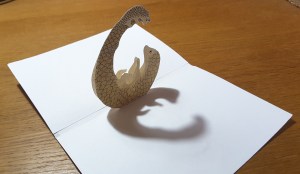
Make and send a pop-up pangolin card. The cute pangolin mom playing with her pangopup appears when you open the card.

For a pdf template and instructions, click on this image:

Use your card to help raise awareness of pangolins! Send it to a friend who might not know that pangolins even exist. Add some pangolin facts to the front and back of the card.
Find out more about pangolins and the actions being taken to help them on The IUCN SSC Pangolin Specialist Group website
Did you know a baby pangolin is called a pangopup! Pangopups often ride on their mothers tails.
Click on the image for a pdf to print and colour:

More pangolin colouring pages:


Visit the pangolin crafts page and get creative making pangolins in card or felt.

 Rachel L Shaw