Twenty-two mga paruparo

When I visited the Philippines in 2015 for the launch of my picturebooks, we went on a short trek on Mount Makiling. Short probably because I spent so much time chasing butterflies and taking photos that we didn’t get very far!

The butterflies were amazing, I had never seen so many different species in one place. I didn’t know what they were, but made a note of their colours and markings. A very small blue one, a white one with a large black eyespot, one that looks like a zebra. By the end of the trek, we’d see twenty-two different species!

Nakakita tayo ng dalawampu’t dalawa na ibat-ibang klase ng paruparo. Nakita din natin ang malaki na gagamba …but that’s another story (NB I had help with the tagalog!).

Such a remarkable number of species on one short walk.
20160725_182001

This is my identification book for the butterflies of Britain and Ireland. It’s not very big because there aren’t many butterfly species. Just 59 species in the entire country. I’ve seen 39 of them.

To see 22 butterfly species in just a short walk; it was as if Mount Makiling was demonstrating to me the true meaning of biodiversity (perhaps it was Maria Makiling herself showing me).

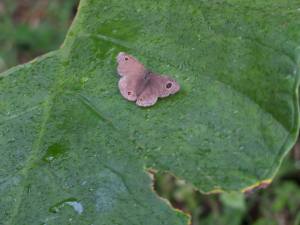
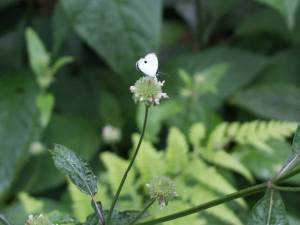
I failed to get photos of most of them and the ones I did get aren’t great but thank you to the wonderful people at Philippine Lepidoptera for identifying them. Check out their facebook page or website for some fantastic butterfly and moth photos and marvel at the biodiversity of the Philippines!

Ragadia luzonia negrosensisRagadia luzonia negrosensis

Koruthaialos rubecula luzonensisKoruthaialos rubecula luzonensis

Ypthima sempera semperaYpthima sempera sempera

Parantica luzonensis luzonensisParantica luzonensis luzonensis

Eurema sarilata aquiloEurema sarilata aquilo

Appias nephele nepheleAppias nephele nephele

Faunis phaon panFaunis phaon pan

Pithecops corvusPithecops corvus

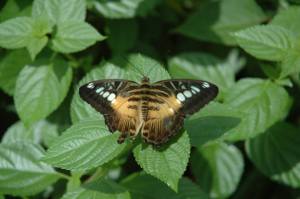
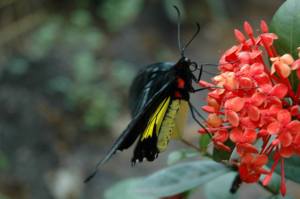
Two butterflies that I managed to photograph in other locations in the Philippines:

Parthenos sylvia philippensisParthenos sylvia philippensis

Troides rhadamantus rhadamantusTroides rhadamantus rhadamantus

Sky islands of Luzon (a poem)

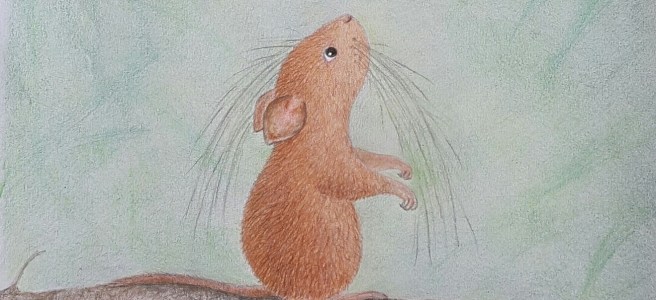
Illustrated of a Banahaw tree mouse

Luzon, the largest island in the Philippines, contains the world’s greatest concentration of unique species of mammals. Of 56 non-flying mammals now known to live on Luzon island, 52 are found nowhere else on Earth.

Reading about these endemic mammals inspired me to write a little poem:

There are islands in the sky 
where foxes have wings and fly.
Rats run amongst the clouds
which cover the forest with misty shrouds
and tiny bats snooze
inside shoots of bamboos.

Mice grow their whiskers from their noses
to the tips of their toes’s
and search under ferns
for juicy worms.
Where are these animals from?
Only the mountain-top islands of Luzon.

— Sky Islands of Luzon —
by Rachel Shaw

Illustrated of a Banahaw tree mouse Banahaw tree mouse (Musseromys gulantang)

Mount Banahaw, LuzonMount Banahaw (my photo from my first visit to the Philippines in 2009)


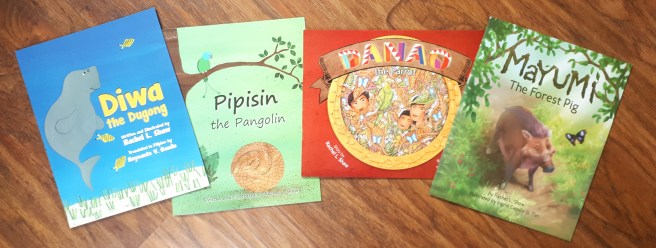
Click on the picture to see my picture books featuring wildlife found only in the Philippines:

Picture books about Philippine wildlife


Games to help children prepare for disasters

We ran around the house, searching for hidden buttons, then made a mooing call like a cow to attract the team leader to collect the button… we didn’t have any digital devices to detract us when I was growing up but we did play some crazy games. The button hunt was a team game, only the leader could pick up the buttons, we couldn’t speak but could make the animal noise of our team. What did the neighbours think?

IMG_20160414_190117Writing picture books for children has connected my back to my childhood. Particularly the books I used to read but also the collections of shells, feathers and bones that I had as a budding naturalist, and, the games we played.

I don’t think I would have started writing stories if hadn’t visited the Philippines and been plunged into a biodiversity hotspot filled with new and exotic wildlife to discover – just like when I discovered new animals as a child. And maybe I wouldn’t have started writing stories if I hadn’t witnessed the impact of a typhoon so soon after I visited.

Recently I’ve been wondering if the games I played as a child and could be adapted to help children learn about disasters and the importance of being prepared. Could games help because they are fun and you learn without knowing you’re learning?

Hazard memory matching cards

A really simple way to learn that there are different types of natural hazard. All you need are cards with pictures of hazards on them (two cards for each hazard: volcano, earthquake, typhoon, tsunami, flood, drought etc)
Shuffle the cards, turn them face down in a square. Each player takes it in turn to turn two cards over, if they match keep them face up, if they don’t match turn them face down again.

Fish flap race

Basic game: Each player (or it could be made into a team game for larger groups) needs a paper fish (tissue paper or similar is ideal because it is very lightweight) and a newspaper or magazine. The players then use the newspaper to ‘flap’ the fish along the floor to the finish line.

To make it relevant – each fish represents a different type of hazard (volcano, earthquake etc). Children write on their fish the hazard (if using normal paper rather than tissue paper, they could draw a picture).

At end of the race, write a leader-board on the blackboard. This then becomes a discussion point about the speed of the onset of disasters. E.g. if ‘drought’ won the race and ‘volcano’ came last, the discussion is about what would happen in reality and how that affects our planning.

Kim’s game

Using a set of cards show items that should be included in an emergency bag.
Lay the cards out, children spend 1 minute looking at the cards.
Then either – take one card away and children have to say what it missing or – cover all the cards and they have to remember all the items.

It’s a memory game but could help children understand the concept of an emergency bag, what the different items are and why they are needed.

Snakes and ladders 

Snakes and ladders seems to be made for learning about disasters – you go down a snake for a disaster and up a ladder when you plan and prepare.
It would work well if it was mainly pictures with as few words as possible. The only squares with illustrations/words should be the ones with snakes and ladders on them – keep the others as a blank colour to focus the children’s attention on the snakes and ladders squares.

Each snake is a hazard (flood, typhoon, tsunami, drought, fire, earthquake, volcano).
Learning:
– different types of hazard
– disasters can happen at any time
– the varied length of the snakes could illustrate the impact of a disaster

Each ladder is something you can do to reduce risk, plan and be prepared.
It might be possible to divide the board so that the first ladders would be things to do to reduce risk (plant trees, clear gabbage from rivers), the next ladders would be planning/preparation (emergency bag, practice evacuation, know your safe place to go to).

Learning:
– things to do to reduce risk and be prepared
– the more ladders you go up, the better prepared you are = reach the end of the game quicker

It could be printed as a board to use on a table and printed large-scale on tarpaulin that the children move on.
IMG_20160414_190117

Where were you when…?

I can’t quite believe it’s so long since I first went to the Philippines as part of a Rotary sponsored Group Study Exchange (GSE). Some of the memories seem so fresh including visiting school on the shores of Laguna de Bay where the children danced for us (though dancing wasn’t unusual, there was always dancing). Just a few months later, the school and so much of the surrounding area was devastated by a typhoon. This is what I wrote at the time, back in early October 2009.

Visiting the school in April 2009

Where were you when…? A phrase probably most associated with the assassination of Kennedy and more recently with the terrorist attacks on the twin towers. It may not have had the same international impact but I’ll always remember the exact moment when I heard about the flooding caused by Typhoon Ketsana (Ondoy) in the Philippines. Driving out of Bridlington an English coastal town with the car radio switched on: it was a sunny Sunday afternoon following the annual conference of Rotary District 1270, where I had been speaking with other members of the GSE Team to District 3820 in the Philippines. I couldn’t quite believe what I was hearing. My initial deep shock turned to feelings of helplessness and distress at a situation where I knew people who were involved but could do nothing to help.

Typhoon Ketsana wreaked havoc in Manila and Laguna – a region visited by our GSE team. One month’s worth of rain fell in six hours; at least 288 people were killed; the homes of 3 million people were damaged or destroyed; and an estimated £72m worth of crops were damaged. The scale of it is difficult to grasp, the long term impact perhaps harder. The disaster is so massive that the government and aid agencies have been overwhelmed. Outside Manila, much of the relief effort is being carried out by volunteers and civic organisations including Rotary.

The town of Bay, on the shore of a large lake, has been a major casualty. In March, when we visited a school in Bay it was an idyllic place. The children sang and danced for us, and we looked over the still blue waters of the lake. Now the school, and adjacent neighbourhood, are chest deep in muddy water. The water isn’t expected to recede for weeks, perhaps months. The smiling children who had met us already had so little, now their homes and school are underwater, their school bags washed away.

The same school after the typhoon, in early October 2009

Like many of the Rotary Clubs in the region, the Rotary Clubs of Bay and West Bay responded immediately. Delivering what emergency relief aid they could. Food, water and clothing were a priority. Now they plan to buy hygiene products, medicines and water purification tablets. They are also preparing the families that will be housed using ShelterBoxes. This immediate response by Filipino Rotarians has been repeated throughout the affected area. But their ability to help those in need is, and will continue to be, limited by a lack of funds.

International aid has arrived in the Philippines but is prioritised in the capital, Manila, leaving those in the provinces such as Laguna feeling frustrated. The Philippines is no stranger to disaster: being in the path of typhoons rolling in off the Pacific and with active volcanoes and earthquake risk. District 3820, has a Calamity Fund to help cope with disasters but this fund is now depleted. The Rotary Clubs have little left to help with the reconstruction/rehabilitation of communities.

The response by Filipinos to the unfolding disaster should be an inspiration to us all, as is the Filipino Rotarians dedication to Service above Self.

This was published by Rotary District 1270 and by a few local newspapers in the UK. We managed to raise funds to help with the relief work carried out by the Rotarians that had hosted and looked after us six months earlier.